Small tablets have always been an awkward category. Too big for a pocket, too small for serious productivity, often under-specced compared to their larger siblings. The Redmi KPad 2 does not follow that pattern. It treats the 8.8 inch form factor as a deliberate gaming device rather than a scaled-down version of something bigger, and the specifications it packs into that size make it genuinely difficult to argue against.
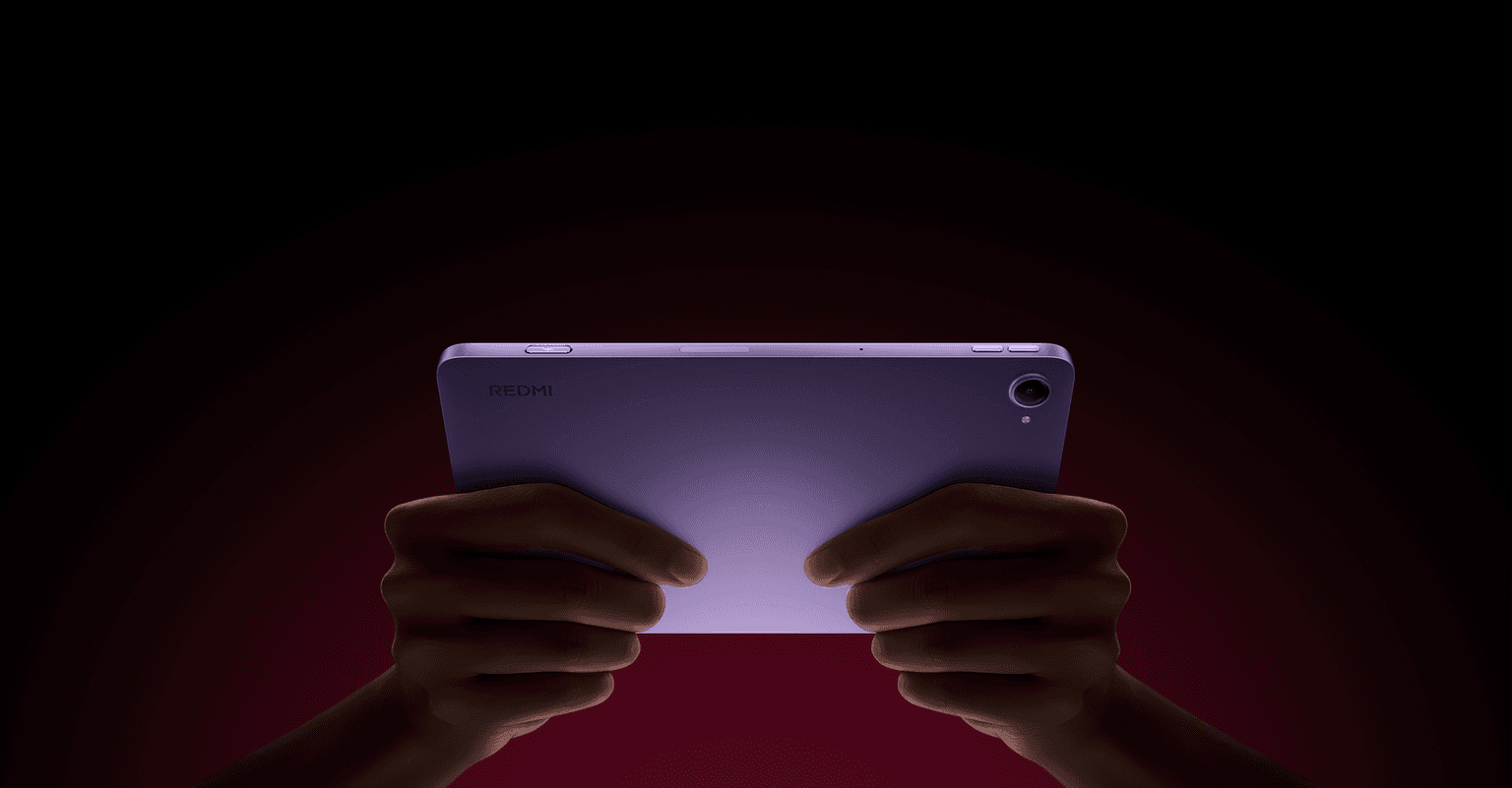
The design lands well from the first moment you pick it up. The full metal unibody uses a micron level ceramic sandblasting process that produces a frosted texture which feels warm rather than cold, skin-friendly rather than clinical. At 345 grams it is not light for its size but the weight is distributed evenly enough that one-handed use feels natural without fatigue building quickly. The integrated camera module with its volcano-like design sits flush and clean against the back panel. The overall impression is of a device that takes its build quality seriously without making a show of it.
The button layout is one of the more thoughtful details. Speakers sit symmetrically on the shorter sides, completely unobstructed in both portrait and landscape orientation. A horizontal USB-C port on the long side allows charging while playing games in landscape mode without the cable getting in the way of your grip. The fingerprint sensor is built into the power button on the side, which is quick and reliable in both orientations. The dedicated custom button on the long edge is programmable to anything you want, rage mode for gaming, eye protection, AI memory functions, or a direct shortcut to any application. One long press activates it, another turns it off.
The display is the component that makes the most immediate impression. An 8.8 inch IPS LCD at 1880 by 3008 resolution, 403 PPI, 165Hz refresh rate with 1100 nits peak brightness. That brightness figure is over 50 percent higher than the previous generation and the difference is immediately visible. For an LCD panel it is vibrant in a way that challenges the assumption that only OLED looks good. HDR10, HDR Vivid, and Dolby Vision support means streaming content renders with proper dynamic range. Corning Gorilla Glass 5 protects the front. The eye protection suite includes adjustable modes, texture simulation, per-application settings, and full-screen eye alerts with timers, which is genuinely useful for extended daily use.
The touch system has been engineered specifically around gaming. A 540Hz multi-finger touch sampling rate covers the joystick area for smooth movement input and the skill button areas for instant response. The 400Hz ultra-sensitive gyroscope delivers a gyroscope delay of just 42 milliseconds in Delta Force. Suppression algorithms reduce accidental touches in non-gaming areas while the anti-stray algorithm handles map input more accurately. This is not a standard tablet display with gaming mode switched on. The touch stack has been rebuilt around competitive mobile gaming requirements.
Gaming performance across thirty minute sustained sessions tells the full story. Honor of Kings at maximum refresh rate and ultra-high resolution averaged 143.9 frames per second with front and back temperatures around 39 to 34 degrees Celsius. Under heavy load at high graphics settings the average held at 60 frames per second with temperatures around 40 degrees Celsius. The 165Hz FPS test in full definition mode averaged 164.8 frames per second with the front reaching 43.8 degrees and the back 41.7 degrees after thirty minutes. Thermal management is solid across every scenario without the tablet becoming uncomfortable to hold.
The Dimensity 9500 on TSMC's 3nm process with an Arm G1-Ultra GPU handles everything without hesitation. Up to 16GB of RAM and 512GB of UFS 4.1 storage at the top configuration means the tablet does not need to compromise between performance and capacity. The dual X-axis linear motor produces haptic feedback that adds a physical dimension to gaming that most tablets skip entirely.
Battery life runs on a 9100mAh cell with 67W wired fast charging. In testing it reached 48 percent in 30 minutes, 71 percent in 50 minutes, and full charge in 1 hour and 26 minutes. After five standard usage tests the remaining battery sat at 65 percent, which means daily charging is optional for most users. Reverse wired charging at 22.5W and bypass charging are also supported.
The Boss-tuned stereo speakers with Dolby Atmos and Hi-Res audio certification deliver sound that is noticeably above average for a tablet this size. The pre-installed software is minimal with only eight apps out of the box. HyperOS 3 on Android 16 is clean and the multitasking and split-screen features work without friction.
The customisable sticker system on the back is a small but genuinely fun detail. You can personalise the back panel without cases or permanent modifications, which suits the audience this tablet is clearly targeting.
Specifications
| Feature | Details |
|---|---|
| Display | 8.8 inch IPS LCD, 1880×3008, 403 PPI |
| Refresh Rate | 165Hz |
| Brightness | 1100 nits peak |
| Protection | Corning Gorilla Glass 5 |
| HDR | HDR10, HDR Vivid, Dolby Vision |
| Touch Sampling | 540Hz multi-finger |
| Chipset | Dimensity 9500, TSMC 3nm |
| CPU | Octa-core, 4.21GHz C1-Ultra |
| GPU | Arm G1-Ultra |
| RAM Options | 8GB / 12GB / 16GB |
| Storage | 256GB or 512GB UFS 4.1 |
| Rear Camera | 13MP f/2.2, 1/3.06 inch, PDAF, 4K 30fps |
| Front Camera | 8MP f/2.3, 1080P 30fps |
| Battery | 9100mAh |
| Charging | 67W wired, 22.5W reverse wired, bypass charging |
| Wi-Fi | Wi-Fi 7, dual band |
| Bluetooth | 5.4, LHDC 5, Auracast |
| USB | 1x USB-C 3.2, 1x USB-C 2.0, DisplayPort 1.4 |
| Speakers | Stereo, Dolby Atmos, Hi-Res audio |
| Gyroscope | 400Hz ultra-sensitive |
| Haptics | Dual X-axis linear motor |
| OS | Android 16, HyperOS 3 |
| Dimensions | 205 × 133.8 × 6.6mm |
| Weight | 345g |
| Colors | Black, Silver, Violet |
| SIM | No |
| NFC | No |
| Infrared | Yes |