Nobody asked for 4K on a gaming tablet. The honest answer to why that is comes down to expectation rather than desire. Tablets have spent years being positioned as the middle ground between a phone and a laptop, good enough for watching content, passable for light work, and acceptable for casual games. Nobody pushed for more because nobody believed more was coming. The iQOO Pad 6 Pro arrives with a 13.2 inch 4K 144Hz display and a Snapdragon 8 Ultra chip and makes the strongest possible case that the category had a ceiling we invented for ourselves.
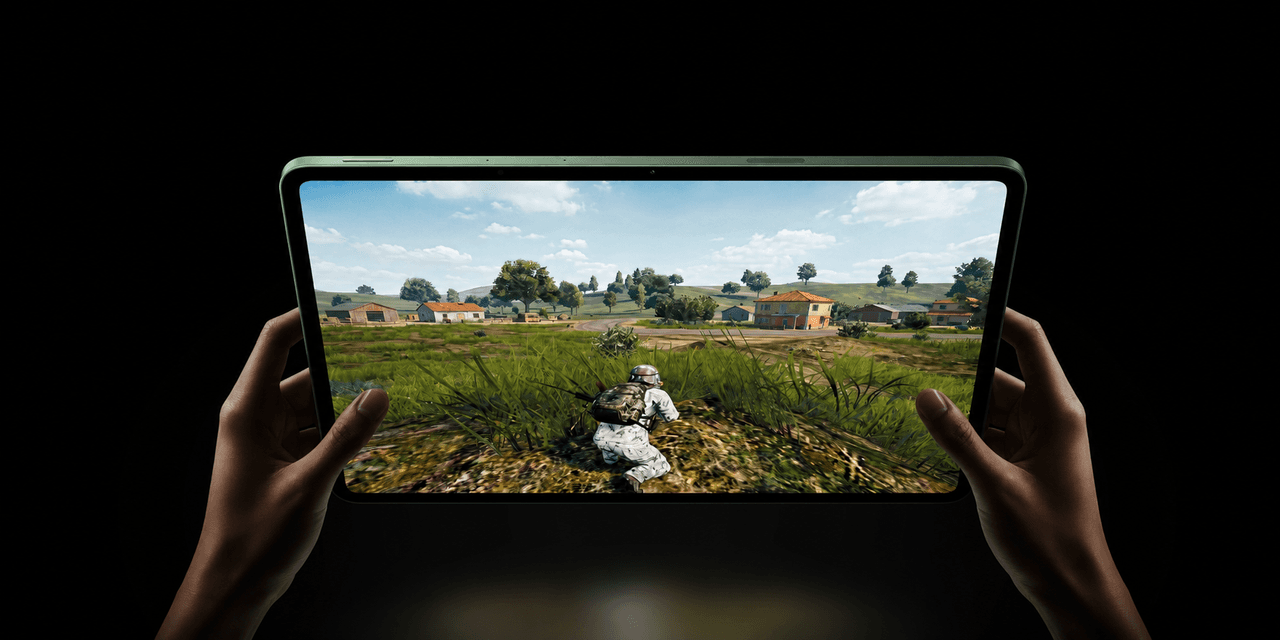
The screen is where this tablet leads every conversation. 3840 by 2512 resolution at 13.2 inches means the pixel density is high enough that text edges are sharp, hair detail in video is rendered without any softness, and the difference between 4K content and non-4K content is immediately visible rather than something you have to look for. The 3:2 aspect ratio gives more vertical real estate in landscape mode than a standard widescreen tablet, which benefits both document work and gaming maps equally. The 144Hz refresh rate paired with a 480Hz touch sampling rate means the display keeps pace with fast inputs without any visible lag between finger movement and response on screen.
The body is 6.18mm thin and weighs 663 grams despite housing a 13000mAh battery and a cooling system with a total vapour chamber area of over 71000 square millimetres. Holding it one-handed for any length of time is unrealistic at this size, but in landscape gaming mode with both hands the weight distribution is even enough that long sessions do not build noticeable fatigue.
I ran Genshin Impact for a full hour at maximum graphics settings with Monster Plus mode active and 60 frames per second locked. The frame rate graph at the end of that session was essentially a flat line at 60 FPS across the entire run, through open world traversal, dense particle effects, and multi-enemy combat. The back of the device got warm in the central area during that session but the grip edges stayed cool. That thermal management is what makes sustained performance possible on a large screen device. The cooling system has space to work here in a way that phone-sized hardware simply cannot match.
PUBG Mobile in 4K super-resolution at native 144 frames per second ran for a full 30-minute match and averaged 143.7 frames per second. The difference between having 4K super-resolution on and off is not subtle. With it off, foliage reads as flat blocks of colour and distant objects lack definition. With it on, leaf edges are individually rendered, window outlines on distant buildings are sharp, and players at range are clearly distinguishable. In a competitive game that information gap is real and it affects gameplay, not just how the game looks in screenshots.
The aiming and gyroscope response in FPS games is where the 480Hz touch sampling rate earns its specification. Cursor movement and finger swipes stay in sync without any perceptible delay between input and output. Multi-finger control layouts with edge-mounted buttons for firing and peeking registered accurately without accidental touches during fast engagements.
Beyond gaming the tablet handles multitasking through a split-screen system that ran five simultaneous windows during my testing without slowing down. The cross-device workflow connecting the tablet to a phone for instant 4K footage transfer and then into editing software completes a creation loop that previously required a laptop at minimum.
The 4K game recording feature solved something I had been dealing with for years without realising it needed solving. Highlight moments in fast-paced games disappear before manual recording can capture them. The automatic system saves the preceding seconds as a 4K clip with a single tap after the moment has passed. Reviewing a triple elimination in full 4K with preserved bullet trajectory detail and impact effects is a different experience from a compressed screenshot.
At this screen size with this hardware inside it, the iQOO Pad 6 Pro is not a tablet that games reasonably well. It is a gaming device that happens to fold productivity into the same chassis. That distinction matters for anyone who has been compromising on one or the other.