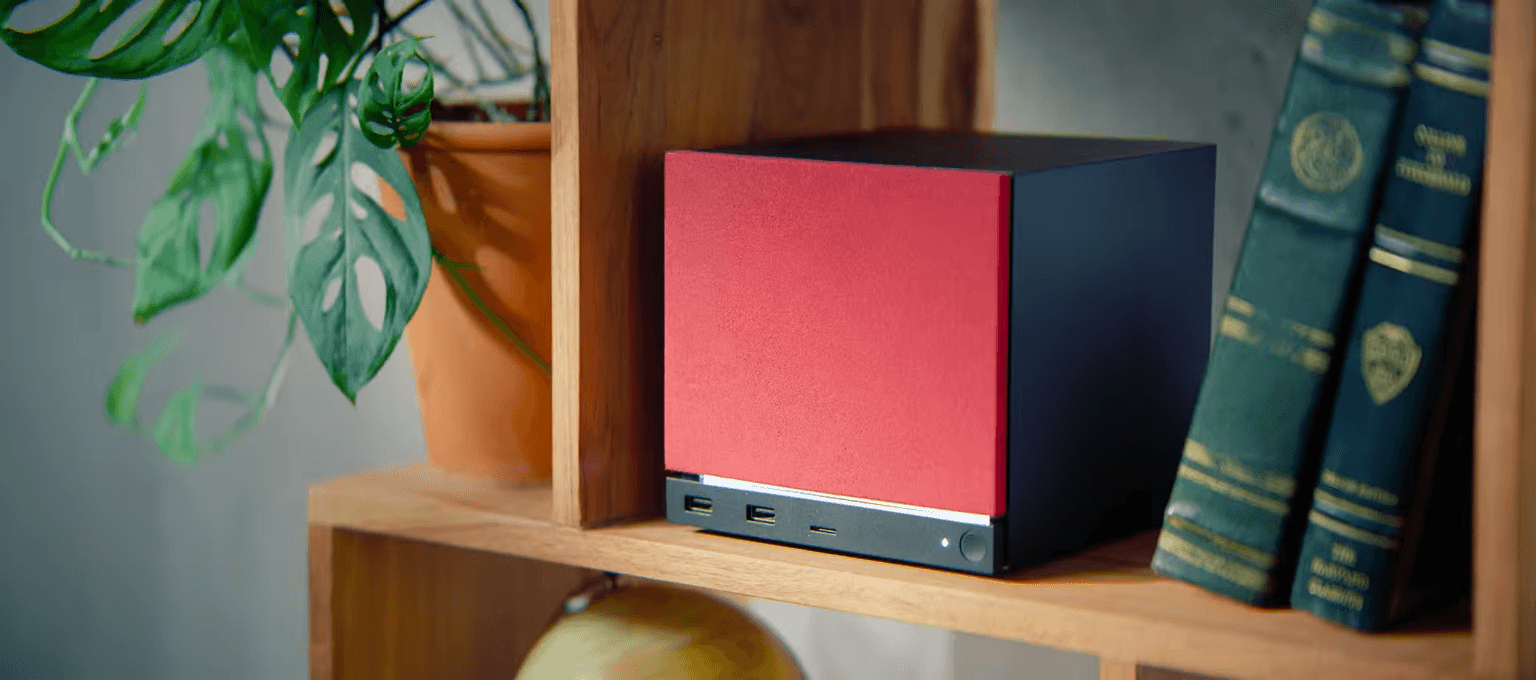
When Valve first announced the Steam Machine, I was one of the people genuinely excited about it. The pitch was simple and brilliant: a small, quiet box running SteamOS that boots straight into your Steam library, plays like a console, but gives you access to the entire PC gaming ecosystem. No Windows nonsense, no setup headaches, just games. The internet loved it. I loved it.
Then the price landed and the conversation changed overnight.
$1,049 for the base model. That is not console money. That is not even budget PC money. For that amount in 2026 you can build a desktop that runs circles around the Steam Machine in raw performance, with more VRAM, more storage options, and the freedom to upgrade any component whenever you want. The comparison to Xbox, PlayStation, and Nintendo becomes brutal at that price point. A PS5 Pro costs significantly less. A Nintendo Switch 2 is a fraction of it. Even a mid-range gaming PC build starts looking competitive when you account for what the Steam Machine gives you for that thousand dollars.
So what happened? Valve just explained it, and honestly the answer makes me feel conflicted about the whole situation.
In a recent interview, Valve revealed that it has essentially zero negotiating power when buying DRAM. There are only a handful of major memory manufacturers in the world capable of producing the chips that go into computers, phones, and game consoles. Valve cannot sign long-term supply contracts with any of them. Instead, memory vendors send a monthly price quote and a quantity limit. Valve can accept or walk away. That is the entire negotiation. A Valve employee put it plainly: refuse their terms once and they never contact you again.
That is an extraordinary amount of power concentrated in a small number of companies. The reason those manufacturers can operate this way is that their most important customers right now are AI hyperscale data centers. OpenAI, Microsoft, Google, and similar companies place enormous orders months in advance and pay margins that consumer electronics companies simply cannot match. Against that demand, Valve's Steam Machine order quantities are essentially irrelevant to a DRAM supplier's business. G.Skill, a brand built entirely on consumer memory, is facing the same procurement struggles. If companies whose entire identity is consumer RAM cannot compete for supply, a hardware startup like Valve's Steam Machine division had no chance.
The practical consequence of this shows up in the memory configuration. Some Steam Machines ship with a single 16GB RAM module. Others come with two 8GB modules in dual channel. This inconsistency exists because Valve is buying whatever configuration is available month to month rather than specifying exactly what it wants. Valve says internal testing shows no significant game performance difference between the two setups, which is probably true at 1080p, but the fact that the configuration varies between units at this price is not a great look.
Here is what makes this genuinely frustrating. The Steam Machine was never supposed to compete with a custom PC build on raw hardware value. The pitch was always about the experience: the tuning, the console-simple boot, the verified game profiles, the controller integration. And that experience is real and it is good. But the price gap between what people expected and what it launched at has made that argument very hard to win in comment sections and comparison videos.
When something is priced at $700 or $800, the experience premium feels justifiable. At $1,049 people immediately pull up PC part picker and start building configurations. And when those configurations come out ahead on paper, the Steam Machine loses the argument even if the lived experience tells a different story.
It is also worth knowing that 25 years ago the US government prosecuted the largest illegal memory price-fixing cartel in history. The companies found guilty then are the same major DRAM manufacturers operating today. I am not suggesting anything illegal is happening now. But the structural situation, where a tiny group of suppliers can dictate terms to an entire industry with no realistic alternative, does rhyme with something uncomfortable.
Major technology companies keep increasing AI infrastructure investment and memory demand from data centers is not slowing down. In the short term, the cost of computers, consoles, and gaming hardware is going up, not down. The Steam Machine price is not a Valve problem to fix. It is a supply chain problem that Valve cannot negotiate its way out of, and consumers are the ones absorbing the cost.
I still think the Steam Machine is a genuinely interesting product. I just wish the timing had been different.