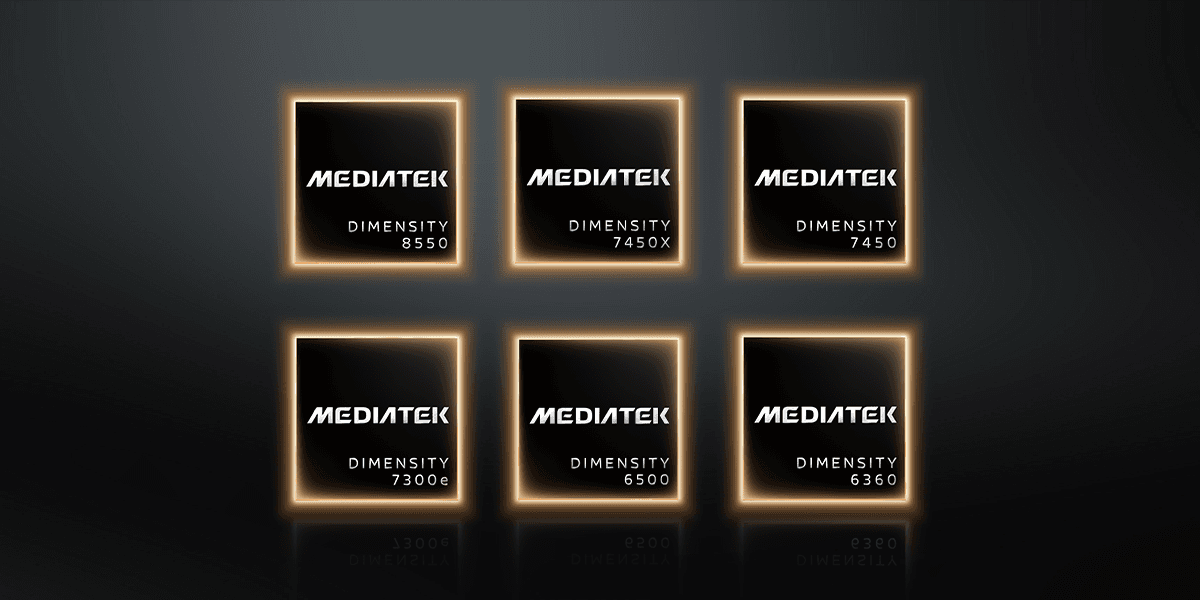
MediaTek held the top position in global smartphone chipset market share in the first quarter of 2026 but the lead narrowed considerably. Its 32 percent share represents a six percentage point drop from 38 percent in the same period of 2025. The memory shortage that has been pushing up component costs across the industry hit MediaTek's mainstream and entry-level shipments directly, and even its high-end segment saw a slight decline. The Dimensity 8450 carried most of the volume this quarter with the OPPO Reno 15 series providing meaningful support. Counterpoint confirmed there will be no Dimensity 9500 Plus chip, meaning manufacturers will move straight from the 9500 to whatever comes next.
Qualcomm came in at 23 percent, down four percentage points year over year. The same memory shortage pressure affected the Snapdragon 400 and 600 series in the mid-range while high-end shipments also took a hit.
Apple was the clearest winner in the quarter, climbing four percentage points to 19 percent. The iPhone 17e launch with the A19 chip opened a new price point that drove volume, while the iPhone 17 Pro models continued selling strongly. Apple's ability to control its own chip supply chain insulated it from the memory shortage in ways that dependent chipmakers could not match.
Unisoc reached 14 percent, also up four percentage points, driven by design wins for the T7250 in the LTE market and the T8300 securing orders from mainstream manufacturers in the entry-level 5G segment. Samsung's Exynos division held 7 percent, up two points, with the Exynos 2600 powering the base Galaxy S26 series doing most of the heavy lifting. HiSilicon sat at 4 percent, with the Huawei Mate 80 series contributing at the high end while mid-range shipments declined.
The pattern across this data points clearly to one thing. The memory shortage is redistributing market share by punishing volume-dependent chipmakers more than premium-focused ones. Apple's integrated approach made it the biggest beneficiary of a quarter where everyone else was fighting over constrained supply. i think the are doing good and even back in covid time they were doing well when chip shortage was on rise so they are the future and might give good fight with the snapdragon. It's a tiwan based companey