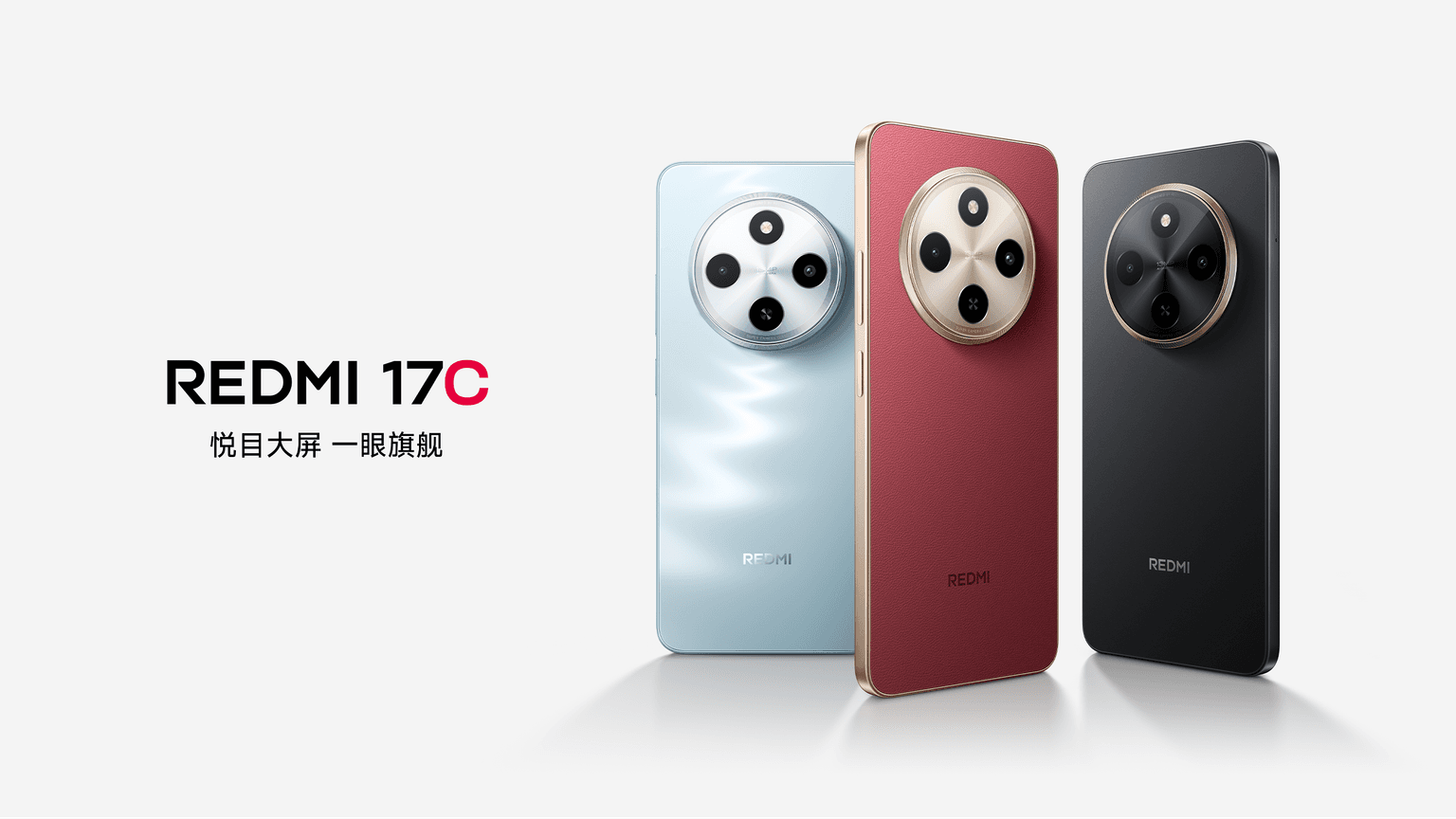
Budget phones have a reputation for cutting corners in places that matter. The Redmi 17C is trying to change that conversation at 799 yuan, and looking at what it brings to the table, it makes a reasonable case for itself.
The phone is now available in two configurations: 4GB plus 64GB at 799 yuan (roughly $110 or ₹9,200 at exchange rates, expect slightly higher in India) and 4GB plus 128GB at 899 yuan. Three colour options are available at launch: black, sunset red, and sea breeze blue. All three honestly look beautiful in their own way, and I would love to know which one you are going for so drop a comment below. Personally I am drawn to the white finish, and the red is genuinely striking, though I know punchy reds are not for everyone. If bold colours are not your thing, the sea breeze blue is the safe and clean option.
Redmi 17C Full Specifications
| Feature | Details |
|---|---|
| Display | 6.88-inch IPS LCD, 1640x720, 120Hz, 240Hz touch sampling, 600 nits, 1500:1 contrast |
| Eye Protection | Full-process DC dimming, wet touch support, TÜV Rheinland Triple Eye Care Certified |
| Processor | MediaTek Helio G81-Ultra, Octa-core, up to 2.0GHz |
| GPU | ARM Mali-G52 MC2 |
| RAM | 4GB |
| Storage | 64GB / 128GB |
| OS | Xiaomi HyperOS 3 |
| Rear Camera | 13MP main camera |
| Front Camera | 5MP |
| Video Recording | 1080p at 30fps, 720p at 30fps (front and rear) |
| Battery | 5160mAh (typical) / 5060mAh (minimum) |
| Charging | 18W wired fast charging, USB Type-C (10W charger in box) |
| Fingerprint | Side-mounted |
| SIM | Dual SIM + dedicated microSD slot (2+1 tray) |
| Network | 4G LTE, 3G WCDMA, 2G GSM |
| Wi-Fi | Wi-Fi 5 (2.4GHz + 5GHz), Wi-Fi Direct, Miracast |
| Bluetooth | 5.4, AAC / SBC / LDAC |
| Navigation | GPS L1, BeiDou B1I, Galileo E1, GLONASS G1, A-GPS |
| Audio | 3.5mm headphone jack, single speaker |
| Sensors | Accelerometer, ambient light, virtual proximity, electronic compass, vibration motor |
| Dimensions | 171.88 x 77.8 x 8.22mm |
| Weight | 206g |
| Colours | Black, Sunset Red, Sea Breeze Blue |
| In Box | Phone, charger, USB-C cable, protective case, screen protector (pre-applied), SIM tool, manual |
The display is where Redmi has put genuine effort for this price. A 6.88-inch panel at 120Hz with 240Hz touch sampling, full-process DC dimming, and TÜV Rheinland triple eye care certification is not something you typically see under 1000 yuan. DC dimming matters because it eliminates the flickering that PWM-based brightness control causes, which is the real reason eyes get tired during long screen sessions. Wet touch support means the screen responds normally even with damp fingers, which is a small quality of life detail that budget phones routinely skip.
The Helio G81-Ultra is not a gaming powerhouse, but it handles everyday tasks, social media, video streaming, and casual gaming without trouble. Paired with HyperOS 3 the software experience is cleaner than what most phones at this price deliver, and Xiao Ai voice assistant adds hands-free convenience for quick queries and reminders.
The 5160mAh battery is sized generously for a phone this light on processing demands. With the Helio G81-Ultra's efficient power draw, real-world endurance should be strong across a full day of mixed use. Redmi claims four-year battery durability, which is a longevity promise that matters for buyers who keep phones for several years rather than upgrading annually. The 18W charging is adequate though the included 10W adapter in the box means buying a faster charger separately to hit the 18W ceiling.
Camera expectations at this price should be realistic. The 13MP main camera with portrait mode, night mode, film filters, and time-lapse covers the bases for everyday photography. The 5MP front camera handles selfies and face unlock. Neither sensor is going to challenge a mid-range flagship, but for documenting daily life and video calls they are sufficient.
The 3.5mm headphone jack and dedicated microSD slot via the 2+1 tray are features that more expensive phones have been quietly removing. At 799 yuan keeping both is the right call.