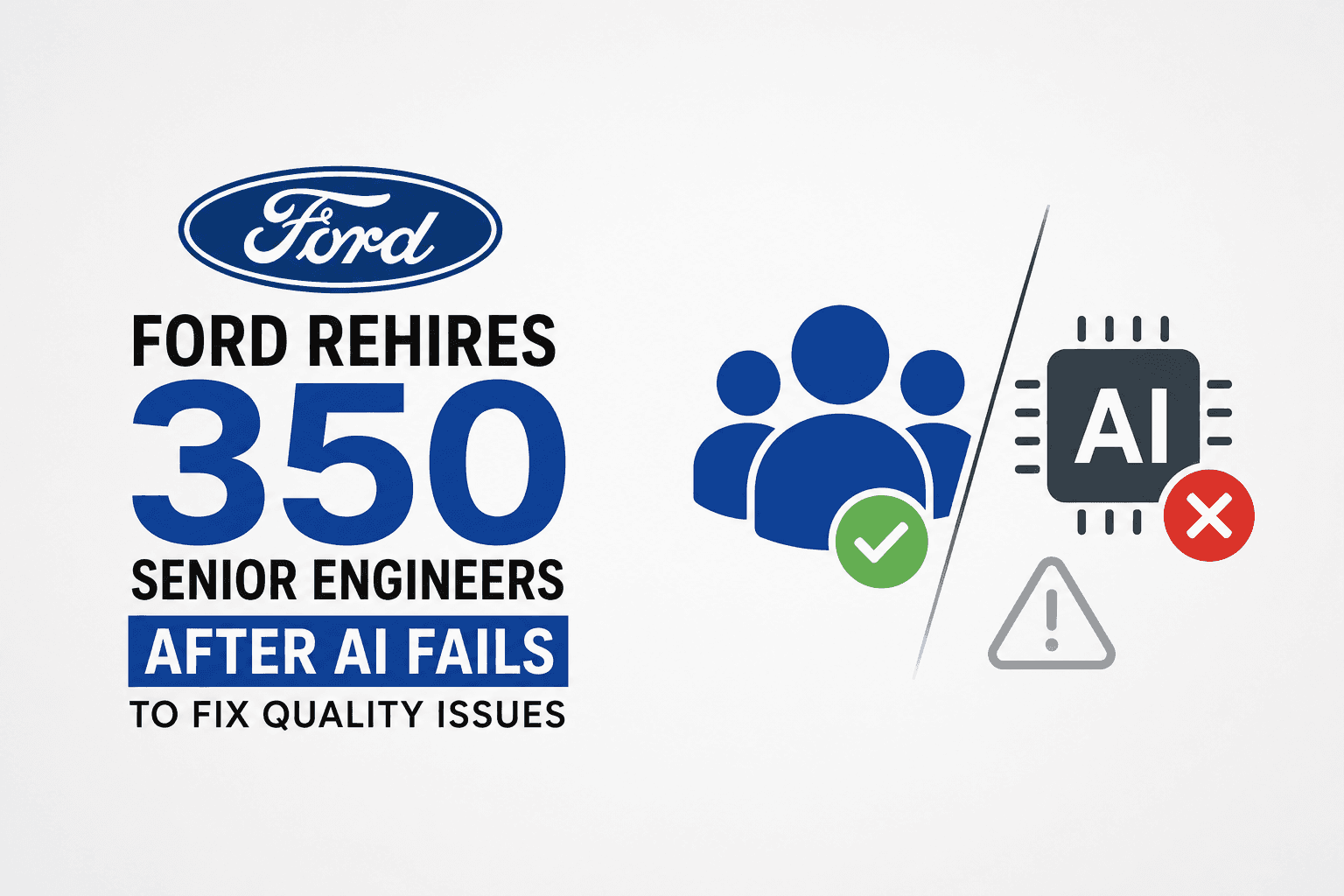
Ford tried leaning on AI to fix its vehicle quality problems and it did not work. The company has now reached a conclusion that should probably have been obvious from the start: experienced engineers cannot be replaced by algorithms when the underlying training data is incomplete.
Over the past three years Ford has rehired approximately 350 senior professionals, many of them former Ford engineers and others brought in from the supplier network. Their job is to tackle long-standing quality issues that AI and automation systems failed to resolve on their own. These engineers are now sitting in mandatory failure analysis meetings, helping development teams catch weaknesses early before they become production problems, and adjusting the training data and workflows inside Ford's existing AI systems.
Charles Pohn, Ford's head of vehicle hardware development, was direct about what went wrong. The effectiveness of any AI system depends entirely on the quality of information used to train it. Ford assumed that existing development data alone would be sufficient to produce high-quality vehicles without fully capturing the institutional knowledge that long-term employees carried. That assumption proved wrong and the recall history reflected it.
The results of bringing experienced people back are already showing up in the numbers. Ford CEO Jim Farley confirmed that warranty and recall costs are declining, generating savings of hundreds of millions of dollars. The latest JD Power Initial Quality Study placed Ford first among Volkswagen Group brands, ahead of Toyota and Honda. That study covers quality performance in the first three months after purchase. Ford ranked tenth among Volkswagen brands just a year ago, sitting below the industry average. The improvement is significant.
The situation is not fully resolved. Ford remains the automaker with the most recalls in the United States and expects warranty expenses and material costs to stay elevated in the near term. The company's position is that current recall pressure largely reflects older quality issues working their way through the system, and that as newer generation models enter the market the recall numbers should gradually decline.
The broader lesson here is one the tech industry keeps relearning in different contexts. AI performs well when trained on accurate, comprehensive data built around real-world expertise. When that foundation is missing, the output reflects the gap. Ford's three-year detour through AI-first quality management and its return to experienced human engineers is an expensive illustration of that principle. I think in future other companies who tried to implement the AI in their workflow has hit bad.