DJI built the Pocket category almost by accident. A mechanical gimbal small enough to fit in a shirt pocket, a sensor capable of shooting stable 4K footage, and a price low enough that casual creators could justify it alongside their phone. The Osmo Pocket 3 crossed ten million units sold by September 2025, two years after launch. For context that is roughly equal to the annual sales of most smartphone flagship models. DJI proved the market existed and made it look easy. Now every major phone manufacturer in China is watching that number and doing the same calculation.
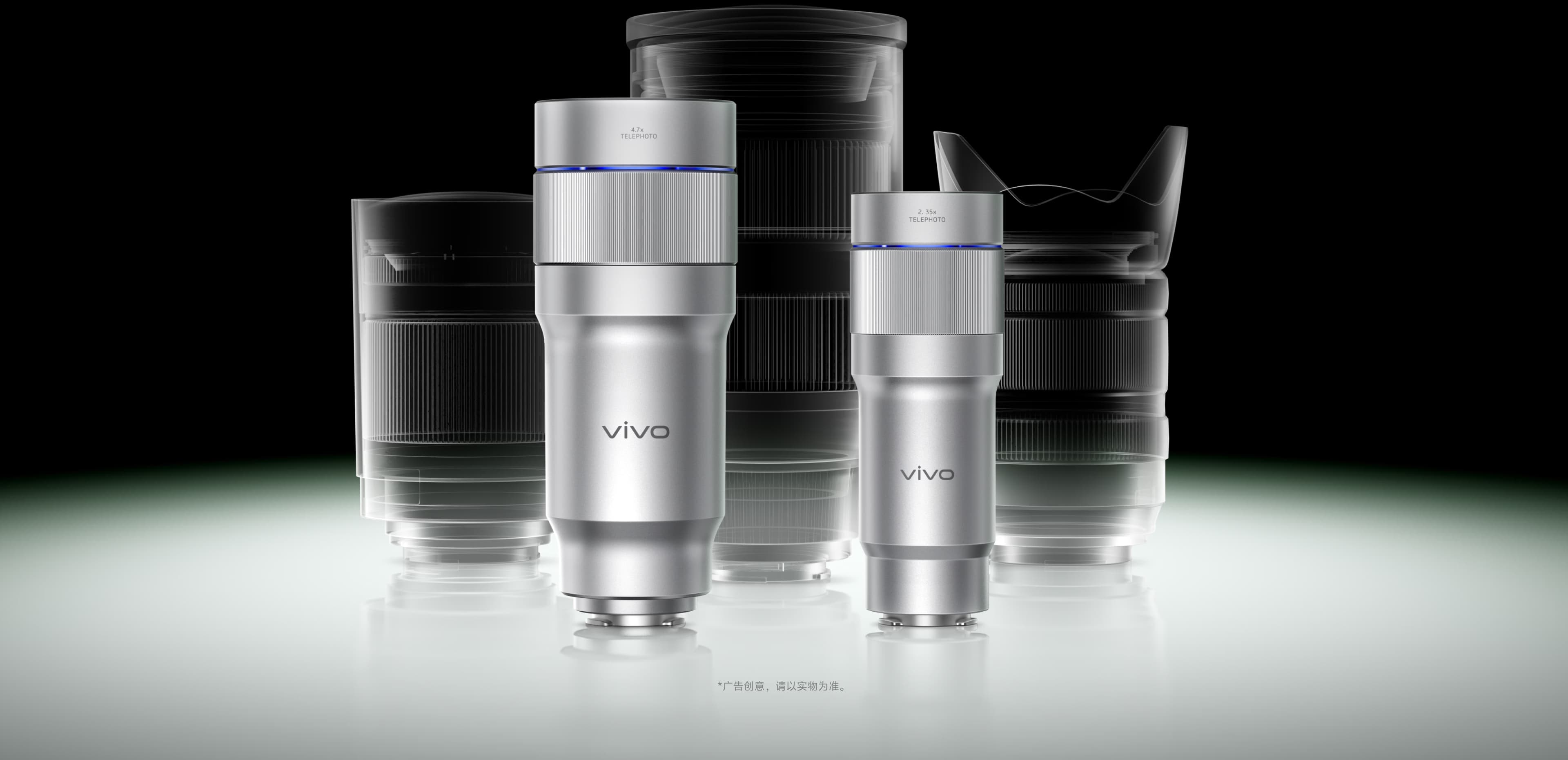
Vivo confirmed internally at the end of 2025 that it had initiated a Pocket-style vlog camera project aimed directly at DJI's lineup, with a release expected in 2026. The move looks like a crossover from the outside but the foundations were already in place before the project was announced. Vivo spent years inside the one-inch sensor ecosystem alongside Xiaomi, OPPO, and others. The Sony IMX989 and its successor the LYT900 have been at the centre of the domestic mobile imaging arms race since the Xiaomi 12S Ultra opened that chapter. Hundreds of millions of yuan in tuning, HDR optimisation, and low light noise work went into understanding how that sensor behaves across every shooting condition. In some respects phone manufacturers know that sensor more intimately than dedicated camera companies do.
Strip out the communication baseband from a modern flagship, swap the OLED panel for a small viewfinder, and relax the heat dissipation constraints that a pocket-sized phone demands. What remains is essentially a vlog camera with hardware already optimised for the job. Vivo also has its Blueprint V3+ image chip, a self-developed processor capable of handling 4K 60fps portrait video independently. The gimbal experience comes from the X50 and X60 era when Vivo experimented with miniature mechanical stabilisation inside a phone body. That project did not continue but the engineering data on micro-mechanical structure and drop resistance testing did not disappear.
The focal length side is covered too. Vivo's X200 Ultra uses a 13mm ultra-wide as its default video camera rather than the main lens, which mirrors exactly the shooting angle that made the DJI Pocket popular for selfies and vlogging. The evolution from 28mm in Pocket 1 to 20mm in Pocket 2 was DJI chasing what phone manufacturers had already learned their users wanted. Vivo was already there. The Log workflow support and ACES colour encoding integration that Vivo added to its phones means footage from a Vivo Pocket device would slot directly into professional editing pipelines without any conversion friction.
Vivo is not alone in this race. OPPO's chief product officer personally led a Pocket project that was confirmed before the end of 2025, with a product expected in 2026. Huawei and Xiaomi are both reported to be evaluating the same direction. Honor showed something more radical at CES 2026, a concept called the Robot Phone that integrates the gimbal and camera module directly into the phone body itself, folding into the imaging section rather than existing as a separate device. InStone, a standalone camera brand, is also releasing a modular Pocket device with a dual-camera setup that could include a medium to long telephoto option, a focal length the current Pocket 3 cannot offer at all.
The collective pressure on DJI comes from a structural advantage that no dedicated camera company can easily replicate. Phone manufacturers already have the ecosystem. A Pocket device from Vivo or OPPO could transfer footage to the paired phone with a single tap over a proprietary protocol. The phone's AI editing tools, trained on millions of clips and continuously updated, would be available immediately on the footage. In a shooting scenario the phone and the Pocket camera could work as a two-device rig, one handling wide establishing shots while the other handles close-up tracking. DJI's Pocket connects to phones through an app and a cable. That friction is small but it is real, and removing it entirely is precisely the kind of seamless integration that shifts buying decisions.
DJI Pocket 4 remains unannounced. The Pocket 3 still has a single focal length and data transfer that requires going through an app. For eight years DJI had this form factor to itself. The competition that is arriving in 2026 has the sensors, the stabilisation experience, the software pipelines, and the ecosystem integration to challenge every one of those remaining limitations at once.